
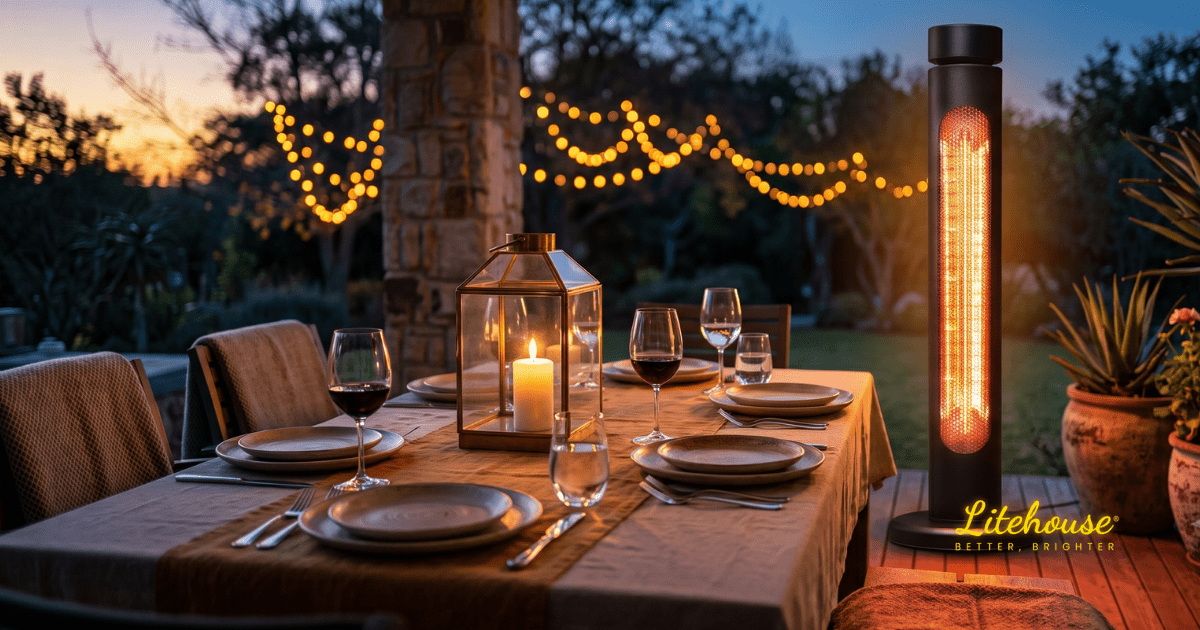
Gas and infrared heaters both warm an outdoor space, but they do it differently. Gas warms the air and needs no electricity, which suits large, open or exposed areas and works through load shedding. Infrared sends radiant heat straight to you, silently and without fumes, which makes it the better fit for most South African patios and stoeps.
That is the short version. The longer version depends on where you sit in the evenings and how you want that space to feel once the sun drops. So let us walk through the gas vs infrared heater question the honest way, and help you choose the one that belongs in your space.
How Gas and Infrared Heaters Actually Work
The difference between a gas heater and an infrared heater comes down to one thing: what they warm. Gas warms the air around you. Infrared warms you directly. That single distinction shapes everything else, from where each heater suits, to how quickly you feel the warmth, to how it holds up in a coastal breeze.
Once you understand the mechanism, the right choice for your space becomes obvious.

The Way Gas Heaters Produce Warmth
A gas heater burns fuel to heat the air, then that warm air circulates around the space. This is convection. The warmth builds gradually and settles where the air is still, which is why a gas patio heater does its best work in large, open areas that need a broad pool of heat.
Because it heats the air itself, a gas heater does not care whether the grid is up or down. It runs off a bottle, so it keeps going through load shedding. The trade-off is that moving air carries warmth away. On a breezy stoep or an exposed corner, some of that heat simply drifts off before it reaches you.
The Way Infrared Heaters Produce Warmth
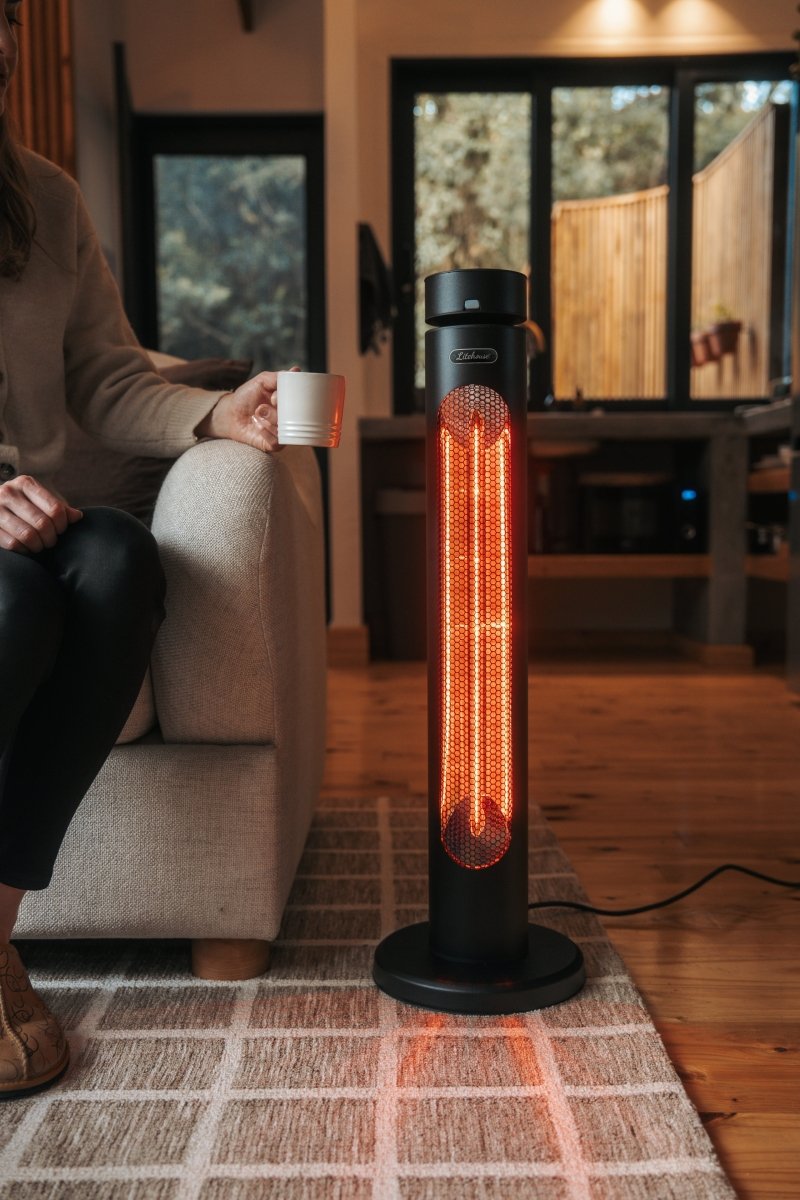
An infrared heater skips the air entirely. It sends radiant heat straight to people and surfaces, the same way sunlight warms your skin on a cool morning. Golden halogen infrared, the kind used in the Litehouse Indoor & Outdoor Infrared Heater, glows a soft amber and warms you the moment you switch it on.
There is no waiting for the air to catch up. The heat reaches you directly, so a passing breeze matters far less. This is why infrared feels so natural on a patio or a semi-enclosed stoep, where you want warmth exactly where you are sitting, not spread thin across the whole garden.
Comparing Heating Performance and Speed
For instant, targeted warmth, infrared wins. For filling a large open volume of air, gas has the edge. Here is how the two compare across the things that actually change your evening.
| Attribute | Gas heater | Infrared heater |
|---|---|---|
| How it heats | Burns fuel to warm the air (convection) | Radiant heat straight to people and surfaces |
| Best setting | Large, open or exposed areas | Patios, stoeps, semi-enclosed and indoor-outdoor |
| During load shedding | Works without electricity | Needs mains power |
| Fumes and air | Combustion, needs good ventilation | No fumes, no emissions |
| Noise | Some hiss from the burner | Silent |
| Setup and refuelling | Gas bottle, refills and swaps | Plug in, no refuelling |
| Warmth feel | Warms the surrounding air, drifts in wind | Feels like sunlight on your skin, reaches you directly |
| Ambience | Flame glow | Warm amber glow, design-led finish |
| Control | Manual dial | Adjustable settings, remote and timer |
Read across the rows and a pattern appears. Gas is built for scale and independence from the grid. Infrared is built for feel, quiet and precision. A gas heater warms a big pocket of air and asks you to sit within it. An infrared heater warms you wherever you happen to be, then lets you fine-tune it with a remote or a timer. Neither is better in the abstract. What matters is the space you are trying to warm, and how you want to spend the hours in it.
Matching the Heater to Your Space
The better question is not which heater wins in the abstract, but which one suits the space you actually use. Match it well and it earns its place every evening.
Gas is at its best filling a large, open or exposed area with warmth. If your entertainment space is broad and unenclosed, that reach is exactly what it is built for. In a smaller, more contained space, the warm air tends to rise and drift, so the warmth spreads across a space you are not really sitting in.
Infrared works the other way. It warms people and surfaces directly rather than the air, so the warmth lands where you are sitting. On a patio or stoep, that focus is exactly what you want, with nothing spread thin across the garden and little lost to a breeze off the sea.
So the choice comes down to fit. Matched to the right space, both do honest work. On most South African patios and stoeps, the targeted warmth of infrared is simply the better fit, and it shows up as an evening well spent.
Installation, Portability and Maintenance
On day-to-day ease, infrared is the simpler companion. On go-anywhere freedom, gas has its moment.
A gas patio heater carries its own fuel, which is its great strength and its small chore. You can wheel it to the far end of the garden, or out to a spot with no plug in sight, and it works. But that independence comes with bottle swaps, refills and a burner that needs the odd check. There is a faint hiss when it runs, and it needs good ventilation, so an enclosed room is off the table.
An infrared heater asks far less of you. Designed to work effortlessly, from the moment you place it, the Litehouse Indoor & Outdoor Infrared Heater plugs in and warms up instantly. No bottles, no refuelling, no fumes to manage. Its weather-resistant build (IP45) is made to stay outside through the seasons, and the remote and timer mean you rarely have to leave your chair. For a patio, a stoep or an indoor-outdoor room, that is a heater that quietly gets on with the job while you enjoy the evening.
Safety and Environmental Considerations
When it comes to enclosed spaces and clean air, infrared has a clear advantage. Because it produces no fumes and has no open flame, it is safe to use indoors and out, from a covered patio to an indoor-outdoor lounge.
A gas heater relies on combustion, so it needs proper ventilation and open air to run safely. That is entirely manageable in an open braai area or an exposed entertainment space, where fresh air is never in short supply. It simply rules gas out of enclosed rooms and tucked-away corners.
Infrared sidesteps all of that. No flame, no emissions, no ventilation to plan around. You get warm, ambient light that changes how your space feels, without a single fume. For families, for pets underfoot, and for those indoor-outdoor spaces that blur the line between inside and out, that peace of mind counts for a great deal. It is one more reason infrared settles so naturally into a considered outdoor space.
Best Uses: Indoor, Outdoor and Patio Heating
Choose gas for large, open or off-grid areas. Choose infrared for patios, stoeps and anywhere you want silent, fume-free warmth exactly where you sit. Match the heater to the space and you will never think about it again.
Choosing Between a Gas Patio Heater and an Electric Patio Heater
A gas heater is the better choice when the space is large, open or exposed, or when there is no power to rely on. It suits a wide entertainment area, a sprawling braai spot, or a corner of the garden far from a plug. Because it needs no electricity, it also keeps going through load shedding, and it moves easily for quick portable heat in the open. Just plan for ventilation, a little burner hiss, and the occasional bottle swap.
An electric patio heater, and infrared in particular, is the better choice for patios, stoeps, semi-enclosed areas and indoor-outdoor rooms. It is silent, fume-free and instant, with adjustable settings you control from your seat. Where you want warmth to feel like part of the room rather than a machine in the corner, infrared belongs.

Litehouse Indoor & Outdoor Infrared Heater
Golden halogen infrared warmth that reaches you, not the air around you. Silent, fume-free and adjustable, with a remote, a timer and a weather-resistant build made to stay outside season after season.
- Radiant heat, felt the moment you switch it on
- Silent and fume-free, safe indoors and out
- Remote, timer and adjustable settings
Three Reasons to Choose Infrared for Your Patio or Stoep
It feels like sunlight on your skin, warming you directly the moment you switch it on.
It runs silently and without fumes, so nothing interrupts the evening.
It gives you full control from your chair, with adjustable settings, a remote and a timer.
Infrared Heaters in South Africa: What to Know
For most South African homes, an infrared heater earns its place quickly. Our coastal humidity and highveld summer storms give way to genuinely cool winter evenings, and the spaces we love, the stoep and the patio, are exactly where infrared does its best work. The warmth reaches you directly, so a coastal breeze does not carry it off, and there are no fumes to worry about under a covered roof.
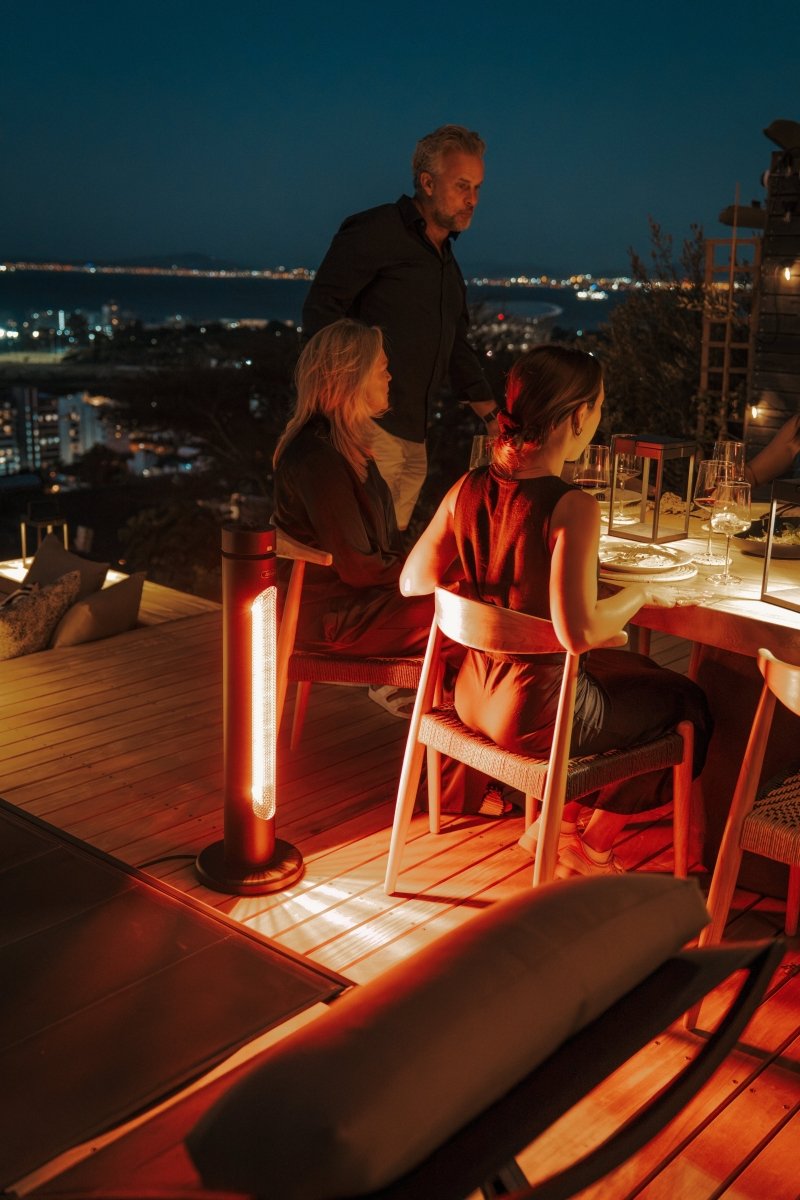
Infrared also pairs beautifully with the way South Africans actually use these spaces. You want to stay outside a little longer after the braai, not pack up the moment the air turns. A silent, glowing infrared heater lets the evening carry on, without a hiss or a fuel bottle to interrupt it.
 Stay outside a little longer, long after the braai
Which Is Better for a South African Patio or Stoep?
For a South African patio or stoep, infrared is the better choice. It gives you warmth exactly where you sit, silently and without fumes, on the very spaces where we spend our best evenings.
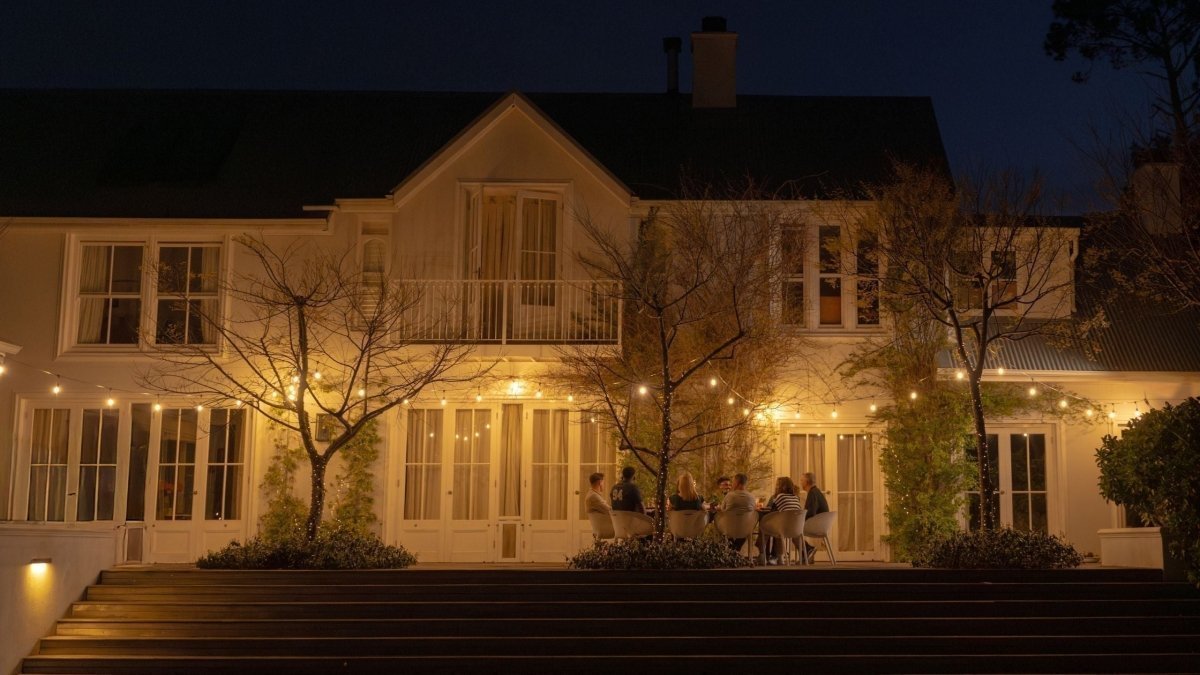
Lighting sets the scene. Heating extends it. The two work together to shape how a space feels once the sun goes down, and infrared slips into that role without drawing attention to itself. A soft amber glow, warmth on your skin, and a stoep that stays comfortable long after you would normally have gone inside.
That is really the point of the whole space. To stay outside a little longer, in good company, on an evening worth remembering. Pair the Litehouse Indoor & Outdoor Infrared Heater with your patio lights and the rest of your outdoor lighting, and the finishing layer falls into place. For a deeper look, see our guide to the best infrared heater in South Africa.
Frequently Asked Questions
Is gas or infrared better for an outdoor space? +
Do infrared heaters work as well as gas heaters outdoors? +
Are infrared heaters better than gas for a patio or stoep? +
Do gas heaters work during load shedding? +
Are infrared heaters safe indoors and outdoors? +
Are gas heaters cheaper to run than infrared? +
Which heater is best for South African winters? +
Complete Your Space
The right heater does not announce itself. It simply lets the evening carry on, with warmth on your skin and a soft glow around you. For most South African patios and stoeps, that is infrared. Backed by a 2-year warranty and trusted by 57,000+ customers, made to stay outside season after season.
Complete your space →



Leave a comment
All comments are moderated before being published.
This site is protected by hCaptcha and the hCaptcha Privacy Policy and Terms of Service apply.